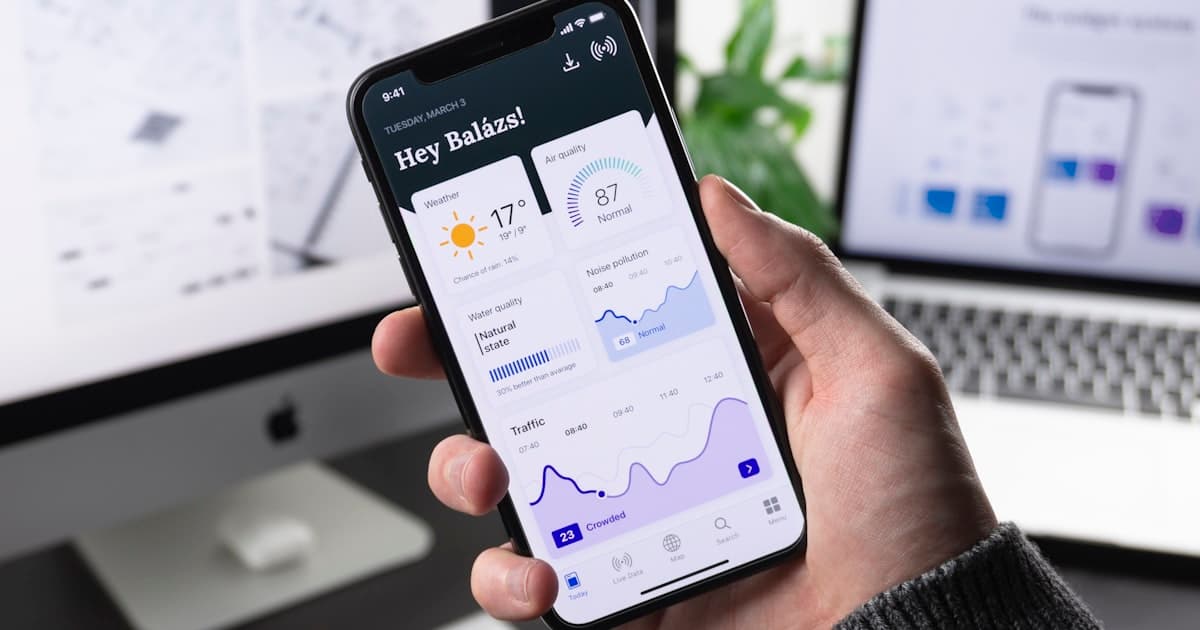
Mobile App Development Insights 2026: Trends Shaping the Future
Discover critical mobile app development trends in 2026. Explore AI integration, cross-platform frameworks, and strategies for building competitive apps.
The AI Revolution in Mobile Apps
Artificial intelligence has transitioned from a luxury feature to a fundamental requirement for competitive mobile applications in 2026.
Artificial intelligence has fundamentally transformed how developers approach mobile app creation in 2026. Companies like Google and Apple have embedded AI capabilities directly into their platforms, making machine learning accessible to developers of all skill levels. From predictive text input to intelligent image recognition, AI-powered features now represent user expectations rather than differentiators. Organizations implementing AI through idataweb's AI development services report 40% improvements in user engagement and retention metrics. The democratization of AI tools means that even small development teams can leverage sophisticated algorithms without massive infrastructure investments.
The practical applications of AI in mobile apps extend far beyond novelty features. Personalization engines powered by machine learning analyze user behavior in real-time, adapting app interfaces and content recommendations dynamically. Banking apps use AI for fraud detection, processing transactions in milliseconds with minimal false positives. Healthcare applications employ predictive models to identify health risks before they become critical. Retail apps leverage computer vision to enable virtual try-ons, reducing return rates significantly. These implementations require developers to understand data privacy regulations while maximizing the benefits of intelligent algorithms.
However, implementing AI responsibly presents significant challenges for development teams. Bias in training data can perpetuate discrimination, while overly aggressive personalization may alienate users who feel over-monitored. Battery consumption becomes a critical concern when running AI models locally on devices with limited processing power. Developers must balance sophisticated functionality with device performance, often requiring server-side processing for complex operations. The best approach involves hybrid models that distribute computational load intelligently between device and cloud infrastructure, ensuring responsive user experiences while managing resource constraints effectively.